
404
Sorry - Page Not Found!
The page you are looking for was moved, removed, renamed
or might never existed. You stumbled upon a broken link :

Sorry - Page Not Found!
The page you are looking for was moved, removed, renamed
or might never existed. You stumbled upon a broken link :
Sorry - Page Not Found!
The page you are looking for was moved, removed, renamed
or might never existed. You stumbled upon a broken link :
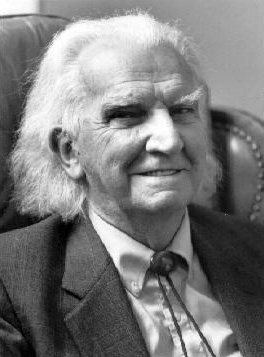
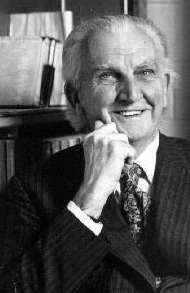
Kenneth Boulding
Kenneth Boulding, an Economist, Philosopher and Poet, Dies at 83
By SYLVIA NASAR
Published: March 20, 1993
Kenneth Boulding, a much-honored but unorthodox economist, philosopher
and poet, died yesterday. He was 83.
His assistant, Vivian Wilson, said Professor Boulding, who had taught at
the University of Colorado in Boulder since 1977, died at his home after
a long bout with cancer.
Nominated at different times for Nobel Prizes in both peace and
economics, Professor Boulding was renowned less for a single
contribution to economics than for a large number of interesting
intellectual and moral insights that both charmed and challenged his
fellow social scientists.
In addition to writing three dozen books, three volumes of poetry and
800 articles, Professor Boulding -- whose white mane, stammer and
pointed wit made him distinctive -- lectured frequently and
entertainingly.
"Ken Boulding is like wine that can't be shipped very far," said Mancur
Olson, a professor of economics at the University of Maryland. "His
talks, his writing were so full of brilliant asides that no summary does
them justice." Early Successes
The son of a plumber, Kenneth Ewart Boulding was born in grimy
Liverpool, England, in 1910. He won a chemistry scholarship to Oxford,
said Mark Blaug, professor emeritus at the University of London, but
soon switched to economics. In 1931, at age 22, he had his first paper
-- a short but brilliant work on economics -- accepted by the Economic
Journal, edited by John Maynard Keynes, the British economist.
After fellowships at Harvard University and the University of Chicago
and a short spell teaching at the University of Edinburgh in Scotland,
Professor Boulding came to the United States for good. He taught at
several colleges around the country before settling at the University of
Colorado.
Like the American economist Paul Samuelson and the British economist
Nicholas Caldor, Professor Boulding initially concentrated on adding his
own insights to Keynes's theory that depressions are due to too little
private spending and that governments should run deficits to end them.
His first book, "Economic Analysis," was an introductory textbook that
over four editions between 1941 and 1966 blended Keynesian and
neoclassical economic theory into a coherent synthesis. Professor Blaug
said the book was "remarkable in showing how far one can go in economics
by using no tool more complicated than that of demand and supply."
Professor Boulding, from a family of deeply religious Methodists, became
a Quaker as a young man and remained a passionate if unconventional
Christian throughout his life. An ardent pacifist, he opposed Word War
II and lost his wartime post as an economist at the League of Nations.
Concerns Beyond Economics
His spiritual and philosophical concerns ultimately led him to look far
beyond economics. "Imagine someone who was half Milton Friedman, half
Mahatma Ghandi," said Professor Olson, who knew Professor Boulding well
and credits him for influencing his own work.
Professor Boulding invented new areas of economics, including the
economics of peace, and published a book of that title in 1945. (An Ayer
edition is still in print.)
Professor Boulding won the John Bates Clark Medal of the American
Economic Association in 1949, a prize given every two years to the
economist under age 40 judged to have made a significant contribution to
economic thought. The award was recognition that Professor Boulding was
one of the best and brightest of his generation of economists. After
that, he increasingly wandered from the traditional concerns of
economics.
"He left economics," said Wassily Leontief, himself a Nobel Prize winner
in economics. "He became a universal philosopher."
Though an outsider among modern economists, Professor Boulding was
heaped with many honors. He became president of the American Economic
Association in 1968 and was awarded dozens of honorary degrees.
Part of his charm was his rare diversity. He wrote rhymed poetry (one of
his books was entitled "Beasts, Ballads and Bouldingisms"), sculptured,
painted water colors and, friends said, used to sing entire Gilbert and
Sullivan musicals from memory and could recite nearly all of Wordsworth.
Professor Boulding is survived by his wife, Dr. Elise M. Boulding, a
professor emerita of sociology at Dartmouth College; five children, J.
Russell, of Bloomington, Ind., Mark, of Denver, Philip, of Olalla,
Wash., William, of Durham, N.C., and Christie Boulding-Graham of
Wayland, Mass., and 16 grandchildren.
http://www.colorado.edu/econ/Kenneth.Boulding/
http://www.personal.psu.edu/~dxl31/research/otherstuff/boulding.html
http://www.panarchy.org/boulding/systems.1956.html
http://globetrotter.berkeley.edu/conversations/Boulding/kboulding-con0.html
http://www.eoearth.org/article/Boulding,_Kenneth_Ewart
http://www.youtube.com/watch?v=cLjhaaP9bP8
Sorry - Page Not Found!
The page you are looking for was moved, removed, renamed
or might never existed. You stumbled upon a broken link :